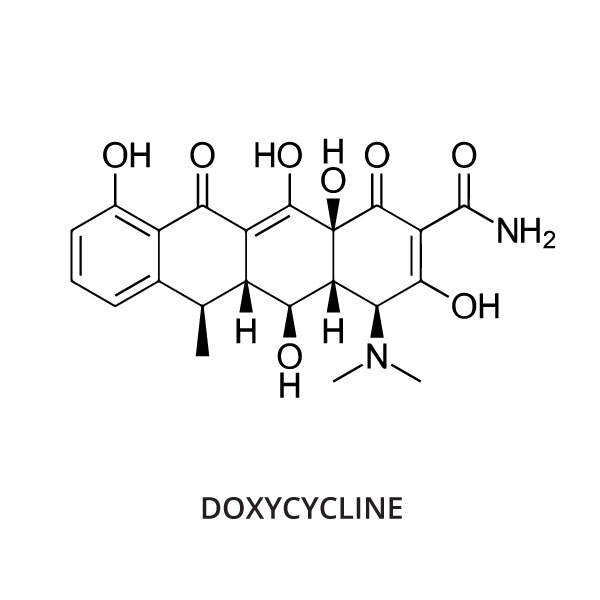
Doxycycline is a broad-spectrum tetracycline antibiotic indicated for the prevention and treatment of respiratory and gastrointestinal infections in poultry caused by a wide range of different gram-positive and gram-negative bacteria. It is active against
Chlamydia spp., Rickettsia spp., Mycoplasma spp., Pasteurella Multocida, Escherichia coli and protozoa (Ismail & El-Kattan, 2004; Pijpers et al., 1989; Yang et al., 2014).
Doxycycline is most commonly used to treat
Avian chlamydiosis caused by the
Chlamydia spp and
Avian Mycoplasmosis caused by
Mycoplasma spp in poultry.
The pharmacokinetics of doxycycline have been established in chickens, ducks, quail, geese, and turkeys. Oral bioavailability of doxycycline is 39% in ducks (Yang et al., 2015), 52% in laying hens (Yang et al., 2016), 41% in the broiler chicken (Anadón et al., 1994), and 43% in geese (Sartini, Irene, et al. 2021).
The half-life elimination of doxycycline in chickens is 4.8 hours. The bioavailability in chickens is 41.3% (20 mg/kg dose).
Caution:- Prolonged treatment can have catabolic and immunosuppressive effects, reduce normal gut flora, and increase the risk of opportunistic secondary infections.
- Birds with existing liver or kidney disease should be closely observed when given this medication.
Egg Withdrawal Period: Doxycycline is not approved for use in poultry producing eggs intended for human consumption in any country. However, multiple studies have been performed to evaluate the depletion of doxycycline in the eggs of treated hens. It is associated with a 7-day withdrawal period for chickens intended for meat purposes.
Storage/Stability: Doxycycline hyclate tablets and capsules should be stored in tight, light resistant containers at temperatures less than 30°C, and preferably at room temperature (15-30°C). After reconstituting with water, the monohydrate oral suspension is stable for 14 days when stored at room temperature.
Disclaimer: Use at your own risk. We assume no responsibility for the use of the drug, dosages given and for any misstatement, error, negligent, or otherwise.